Sunday, August 30, 2009

Stuck at home, so testing cedar elm


Well, I am stuck at home with the new baby! I guess if there is any reason to stay away from the woods, it is our new little girl. Another good thing to come from staying home is I get to use some of the wood harvested and milled from the property. Here is a pic of a box out of cedar elm I milled from a cull tree that was crooked and skinny. Nobody could tell me anything about the wood except that it must be similar to other elms. Duh, but how close? Well, this is one tough, pretty wood. The interlocking grain makes it stringy, and it is very tough. Sharp tools are a must with this wood to prevent burning. It has a very light sapwood and a medium brown heart wood, and there is a very dramatic break between the two. The sap tears out much more than the heart, and quartersawn rays are prone. It does show a very nice rayfleck in the quartersawn grain. The interlocking grain in the sapwood also shows a very interesting zigzag pattern that can make the planesawn faces nice. The hardness made it dificult for me to remove swirl marks from some coarse grit sanding. I think I have found a new favorite wood as long as I can get past the burning issue. I hope to be out in the woods working soon, but until then I have some fruits of my labors to play with.

Thursday, July 9, 2009

BMP's and a trail through the woods

BMP's, or best management practices, are a landowner's friend. They keep a property looking good, prevent future damage, and help keep the neighbors happy. Texas does not require following their BMP guidlines. It is voluntary, and you must make sure they are followed on your property when you have it logged. Here is a link to the Texs BMP's: http://txforestservice.tamu.edu/uploadedfiles/sustainable/bmp/bmpbookindd.pdf .
A trail through the woods is always important if you plan on enjoying them close up. The BMP guidelines can be helpful in planning the trail route and it's construction. If you plan it right, you can even convert logging roads into trails for future use. I have an old logging road running around our property in the shape of a C connecting the two ends of the dam. BMP's were not followed when making this road. A few places need runoff control. The stream crossings are also not in very good shape, but are only an aesthetic and vehicle access issue. I am going to start with the runoff problem since it is the cheapest problem. Wheelchair access for my wife creates an extra dimension to the trail issue. We will be making the trail as smooth as possible with water bars created with trash trees to direct runoff to prevent erosion of the smooth path. Erosion control is also important when you consider all of our runoff goes into the pond. Runoff affects water clarity, condition, and content. It is much easier to control runoff on your property athn to treat a pond for turbidity and other water problems. A properly designed trail should be able to accomodate us and occassional vehicle traffic while limiting harmful impact to the woodlot and wildlife.

Tuesday, July 7, 2009

Taking a forest walk

We went on vacation in Arkansas and went on some nice drives along the Buffalo National River. One spot that was accessible for my wife to get out was near the Henry R. Koen Experimental Forest. We had a picnic and enjoyed the view of the river and forest. Access to the Koen Interpretive Trail in the experimental forest can be found along the Erbie Loop drive on the following website: http://www.nps.gov/archive/buff/autotour.htm . It is a short and easy trail with a lot of labeled trees. If you ever wondered how they experiment on a forest, here is your chance. It is also worth a drive for the views and the old farmsteads along the way. A beautiful area with some great views of rugged hills covered with forest and, of course, the Buffalo river.
Petit Jean State Park has another wheelchair accessible trail that gave me great ideas for our property. It is a boardwalk to an overlook of Cedar Falls. It was easy to walk on and for her to roll on. I believe it would be a great way to make some of the seasonally flooded areas accessible to everyone. A short raised boardwalk over the water and around some of the pond would be great for seeing some of the wildlife. A boardwalk is a lot of work and needs a large amount of wood, but it may be the best option for the property for making it accessible.

Friday, June 12, 2009

A quick June update

Well, it has been busy around the house and tough to get out to the property. I planned on releasing the willow oaks and cutting up the rest of the cedar on the sawmill, but mother nature threw a wrench in that idea. The little garden tractor's engine filed up with water from the big rain event we had a few weeks back. I am not sure if the water came up that high or it blew in somehow. However it got in, it took awhile to change the oil/water at the back of the property where it almost seized up. Now it burns a little oil and I am sure its' days are numbered. I started looking at what to use as a woodland tractor. There are lots of pros and cons for skid steers and compact utility tractors. Once I have tallied up all of the responses, I will post all of them here to make a decision. I may not have the money for the best solution, but I will have it stored on here for the future. I also have very few of the saplings surviving in the high water. Once it goes down in the fall, I will make a head count of the survivors.

Saturday, May 16, 2009

Rain, rain, go away ...

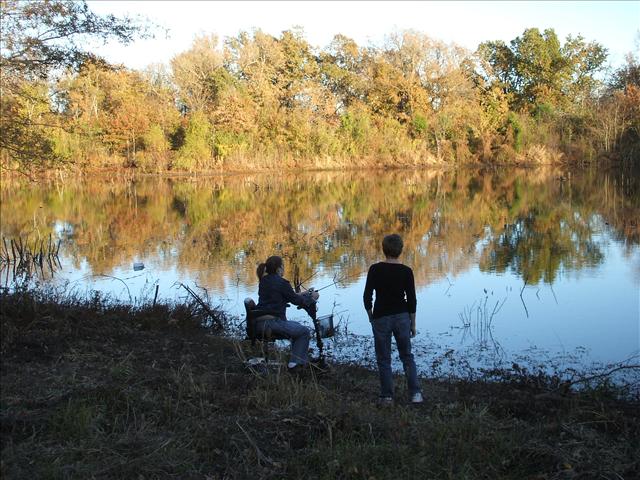
Rain is the bane of my attempts to work on the woodlot right now with 13.2" so far this month and we were double the average last month. May is usually the last chance to work outside before it gets hot in Texas. I managed to go out and check on conditions. The pond is way up and flooding where the dead oaks are located. We finally have definitive proof of why that is happening. Full pool only occurs in the spring and saturates the soil enough to kill the post and willow oaks. I will need to plan for planting more cypress or another water loving tree there next year as these trees desintegrate and rot. A high water level is killing my newly planted cypress and mayhaw seedlings. They can stand flooding as long as their tops are above the surface. Mortality will be higher, but I expected some. They don't last long when they are a foot under the surface. A lone, sick hickory was the only casualty from the severe thunderstorms. Hopefully, the place will dry out some soon so that I can saw up the rest of the dead eastern red cedar and start on my forestry projects of releasing some sapling areas and culling some damaged trees for firewood and saw up some wood for a dock.

Friday, May 1, 2009

What is a woodlot?

Many farmers in the northeast and midwest know the answer to this question. Landowners in the west will quickly understand that their land is could be considered a woodlot. I have not heard anybody in the South consider their property a woodlot, not even the patch of woods left uncleared at the back of a pasture. A woodlot is a wooded area used by the owner to supply various forest products for sale or use. The various uses range from simple firewood and wildlife uses, to intensive timber management including clearcutting and replanting. I consider most of our property our Texas woodlot because it fits into these ideals, even if Texans seldom use the term woodlot. Texas forestry revolves around plantations and tree farming. I have taken on the mantle of woodlot because of my intended uses and strategies. I plan on using the woodlot for firewood, wildlife, refreation, and personal timber production. Generally, a plantation is intended for timber production only with a possible chance at wildlife in the form of a deer lease for extra income. I do not understand whythe Texas Forest Service is behind the curve on woodlots. Parcelization and the large number of private landowners leaves a lot of unmanaged timber in Texas. Forestry can be performed on small properties in Texas, and I aim to prove the Texas Forest Service wrong.

Wednesday, April 29, 2009

Cypress - an alternative crop tree

Cypress brings images of swamps and huge, moss draped trees. A lot of people do not know that it is a fast growing conifer that works well when planted for a future crop tree. The popular image of the swamp full of bald cypress is because of the tree's traits. It can withstand standing water for long periods of time and resists windthrow, important in soft ground. Cypress is often outcompeted on good sites by hardwoods. It is a component of oak-gum-cypress forests, and is usually only a pure stand where conditions prevent competition from other trees. A cypress planted in good soil will grow quickly, have good form, and self prunes well with proper spacing. The ability for it to grow in poor, water logged soils adds to its crop tree potential. I planted an area the pond floods seasonally with cypress earlier this year. We could not get any information from the local forester in time, so we went ahead and planted 200 with 8'x8' spacing. The idea was to replace some dead oaks with a water tolerant species while adding diversity and a tree useful for timber. The nice look of cypress on a pond helped too. Seedling mortality may jump since the pond has flooded most of them, and we may still have a nutria that likes to eat them. Anybody looking for decent timber production in a flood prone area should consider planting cypress. Here are some sites where I researched my decision:
http://www.sref.info/publications/online_pubs/cypress.pdf
http://www.srs.fs.usda.gov/pubs/ja/ja_parresol014.pdf
http://www.fpl.fs.fed.us/documnts/usda/amwood/218baldc.pdf