Showing posts with label trees. Show all posts
Showing posts with label trees. Show all posts
Monday, February 21, 2011
Removing a beaver from a pond: Step 2
I made it out to the property yesterday to set up 2 Conibear 330's for the beaver. New sign was everywhere; so it is definitely still around. I had a lot of help from one of the moderators over at The Pondboss forum. I am not sure I would have safely figured out how to set them, or place them properly. He had a simple rope method to set the springs that left our digits out of the danger areas if it should trip. The traps were set in places where the beaver was entering and leaving the water with the trap's top just higher than the water level. We used sticks to block off any other routes to the spot making the beaver go through the trap. A little pile of mud was placed at the shoreline and a twig was some castor lure was stuck in its top. Now it is a waiting game until the beaver decides to use those two pathways or investigate the lure. I hope step 3 will be the removal of a beaver from a trap and not resetting traps to catch a wiley beaver or more beavers; so stay tuned.

Monday, February 7, 2011
Removing a beaver from a pond: Step 1
 A beaver can wreak havoc on a forest. Providing one with a nice pond for a home increases the chances it will settle in for the long term. Unless you like the looks of the picture at left, making it leave or removal are the only options. Previous visiting beavers left because of the fluctuating pond water level. Beavers do not like changing water levels. The current resident beaver has pushed a little mud around and, combined with a little silting in of the spillway channel, has managed to establish a stable water level on the pond for now. It has set up a nice lodge on our dirt pile at the western shore. We have been lucky that the beaver seem to prefer the green ash and willow growing along the pond shore and have only chewed a few larger green ash junk trees in the forested areas. I could try to induce it to move, but that would require quite a bit of dirt work redigging the spillway channel. Digging the channel does not create the fluctuating water level, droughty summers combined with it do. The only guaranteed way is removal. Many do not recommend shooting as they get real hard to catch or shoot with a missed shot. Trapping is the solution I am going with. A couple of conibear 330's and a castor oil bait are on their way. I have had lots of help from the folks over at http://www.pondboss.com/forums/ubbthreads.php . In fact, one of the members may be able to help me out on site in setting the traps. These are large traps taht are dificult to set and can really hurt you; so I would not recommend setting one without help and first hand knowledge. You may also want to check up on any local laws dealing with fur bearing animals and trapping. I hope to provide the follow up post on the removed nuisance beaver in a few weeks.
Tuesday, January 25, 2011
The orchard site
 I have decided an orchard is the best option for an area north of the pond that has a few trees, lots of grass, and almost no regeneration. Best managment practices say you should not cut trees near streams and other bodies of water. I would not want to plant a tree that I knew would be cut down in the future. Especially since the recommended BMP buffer zone is only going to expand in the future as more people veiw the land as something to protect and not another harvest. The orchard site is in a V between the inlet stream and the outlet stream for the pond. In the photo, you can see the site and the scattered trees that must come out. A bit of land may be useable on the eastern side of the outlet stream as well. A delimna has risen over what to plant. These are not just a yearly crop so you don't want to get it wrong. Mayhaws were my first thought, but the problem is marketing the berries. Jelly and other retail products would be easier, but take a $10k certified kitchen to produce legally. I have begun studying other fruits to grow organically, but run into time, quality, and sitability issues. Pecans are starting to be the front runners now. They have the most proven organic research. A lot of support is available in Texas, including marketing. It is also wide spread and accumulators are present in many locations that buy from small producers. The trick now is figuring out if a small scale operation can make enough money to justify the required equipment. Oh well, more reading to do while I prepare the site by cutting a few trees and starting mowing it down real low in preparation for planting next winter.
Monday, January 24, 2011
Clearing a piece of overgrown pond shore

I would have loved to have spent a day on the tractor, but the job at hand took priority. A skid steer with a mulching head would have been the perfect tool if I had the cash. Free manual labor had to do this time. The original pond must have been rectangular with a dam around all 4 sides. On the north side, it is mostly removed with a big peninsula on the west as pictured below and a smaller one on the east. The smaller one would make a nice secluded campsite. We need room for a tent pad, fire ring, and sitting area. It is relatively flat and overgrown with small trees and lots of thorny vines. You can see how dense it is on the edges of the photo. The brush saw would not stay running for long, but once I started taking the chainsaw to things I realized most was to large for my brush saw anyways. I had about 3 1/2 hours to do some clearing after a quick walk around the place to check everything. One more day should do it on the clearing and then I can take a sharp mattock to any offending stubs and mow the vines. We had a delimna deciding what to do with the brush: burn or chip. Burning is easy and can help clear those vines when done right on top of the clearing. Chipping gives us mulch we can use on paths and the tent camping site. Once all of the cutting is finished, we are going to rent a chipper and make mulch. We might as well make sure there is a full days chipping if we have to rent one for a day. I plan on cutting the larger trunks into firewood for use at home and here. I have a few other topics of interest that warrant a seperate post that I will post in the next few days. They will be about beaver that is still there and starting an orchard in some clear areas at the north end of the property.
Thursday, December 9, 2010
Fall Woodlot Report Part 3: Evaluating the pond

Having the pond on the middle of a forested area has been an interesting learning experience. Trees bring all sorts of extra issues to a pond. They can die when flooded, they drop leaves that make muck in the pond bottom, they reseed all over the pond shore, and they are attractive to beavers. A beaver has set up a homestead on the pond. All that great timber to chew on and a nice convenient pond to live in has inticed one to stay. I had passers through before, but they left when they could not keep the pond level stable. It has been stable for over a year now and this beaver has not left, I think. It has built a den (see photo), tried to bulldoze mud into the overflow pipe, and who knows what other damage I am going to find. Luckily the den is not in the dam; so no tunnels have been found yet that might undeermine it. A conibear trap is in order I believe to get rid of the nuisance.
Trees can be a problem around a pond. I have a large dead area that floods to much and will need more flood tolerant trees like bald cypress and tupelos. These areas also make a nice wetland zone between the seasonal creek and the pond. Sediment is trapped in this area and extends the life of the pond. Leaves from the trees can build up in the pond as well creating a 'pond muck'. It is an anearobic sediment of rotting vegetable matter. I have researched aerators and microbes to act against it. The microbes are more in line with my budget and I may try some next year to get the eradication process started. The microbes you add are the same as the ones added to septic systems. They work anearobically to break down the plant matter. Aeration is quicker, more expensive, and needs elctricity usually. Finally, the trees around the pond make plenty of seeds to sprout around the pond. Usually trees on a dam are bad, but I have been told mine is fine by an expert dam consultant. My issue now is they block access and views. I hope to clear some out completely and clear brush/prune under others to make fishing and viewing spots. Willows and buttonbush are another concern of mine. They can take over the shoreline quickly. I will be using an appropriate herbicide on any I find. These grow very close and in the water; so a proper herbicide for around water is needed to prevent damage to the pond itself. My next post will be on the TSI work I am doing salvaging dead trees and cutting culls to make construction wood with the sawmill for projects on the property.
Friday, November 12, 2010
2 trips in 2 weeks, amazing!
I made it out 2 times in the past 2 weeks. Hope to make it out again next week to hunt and possibly do a little milling. It sure is looking good out there. Cut some wood for the mill, fireplace, and to deer hunt. I scoped out a concrete pad I am sizing up to build a pavilion on for picnics. The trees were cut for either posts or picnic table for the pavilion. A beaver has been out there but not sure if it is still around. A lot of dirt has been pushed up around the overflow pipe on the dam and I found the den. I checked on the trees I have planted. The bald cypress are doing well with some around 5 feet tall. The cottonwood has been hit by animals, and all that is left is little mud puddles in a neat line where they were planted. The mayhaws also look to have drowned in the high water. I will need to get a closer look with waders or rubber boots to tell them apart from the brushy plants. I will get another post up soon with pics and better details.
Friday, June 11, 2010
Finding replacement trees for newly flood prone areas

I have come to the realization that the pond on the property is going to flood quite a bit of the timber. I need to salvage what I can, but also find suitable replacements for the species that cannot stand wet feet for a prolonged period. A few more oaks died, luckily junky ones full of epicormic sprouts, and some eastern redcedar that will not rot before I can get to them. I will probably take the few remaining willow oaks that flood because it is only a matter of time before the flooding suffocates their roots. I already planted cypress last year before realizing just how deep and prolonged the high water gets. A few drowned, and quite a few could be seen this spring sprouting above the water or competing vegetation. The competing vegetation needs to be cut down around these carefully. I decided something else needed to be tried to the North of the pond, and was offered some free cottonwood cutting by a fellow from the Forestry Forum. The problem of figuring out which species to put in ended right there. Free trees is the best way to experiment. The area is along a relatively plant free water course exiting the pond along the north end of the dam. I planted them in a strip between the dam and water course where they should have enough moisture through the dry parts of the year. Planting was simple. I just made sure the buds faced up and stuck them in the ground with 2 nodes above the surface. The pic is from a week after planting and they were budding out nicely. a few did not sprout from the late time I planted these and a few were stepped on by animals knocking off the sprouts. If they work out well I plan to find a way to clear out the brush and grass on the other side of this seasonal waterway to make a proper seedling planting area and plant cottonwoods and bald cypress. Well, the time between new posts should be shorter now that I have a plan, simple projects, and some time to get them done.
Thursday, January 28, 2010
Wow, been a while!

It has been quite a while since I updated this series or been out to the woods. A new addition to the family in the form of a little girl will do that to a person. I had to make time to get out and check on the pond and property. A few items on the to do list had to be taken care of also. The pond was very high when I first pulled in the gate; so a walk around was the first order of business. I shortly found out it was to be a slosh around. Water was pouring into the pond with only 1/2" of rain for the month. The ground was visibly saturated with lots of ponding everywhere a low spot occured. In the back of the property, the culvert leading into the pond had water flowing over it. The culvert for the pond dam end letting the spillway lead into the creek was practically washed out. A large pond has formed where the overflow pipe emptied behind the dam. Drainage needs to be deepened for it as the picture shows.l The standing water there explained the stressed trees in that area. Lots of dirt work is going to be needed in the future, probably to tear out the culverts and add small bridges instead.
I was able to work on realeasing a small area of saplings near the sawmill area. There was a funky post oak and some gnarly, bent cedar elms over topping them. I was able to take down most of them, but time constraints meant I had to leave 2-3 for the next time. I also cut some problem trees that were to close to more desireable trees on the way back. The wet ground prevented me from picking up any of the wood; so I stacked it neatly on the side of the path. I hope to accomplish more the next time I am, barring anymore water damage. I need to finish releasing rhw incomplete area and cutting that wood into firewood. I then need to mark and cut any other bad form trees leading up to that area. I have the property blocked out into 5 areas, and I never really worked on area 1 last year. Twice the work, but twice the fun!
Monday, September 14, 2009
Rains and wood

I am really glad I made it out. Previously, I had my wood stack float 10 feet closer to the pond during a big rain event. It has rained 2.5 inches in the last few days, and I am glad I picked up everything. A large portion of the wood was the dead cedar I milled. I added a picture of some to the left. It is some beautiful wood. I also picked up some 6/4 cedar elm lumber and the osage stump I milled. I should be set on porject wood for a while, and need to rig up a router jig to plane the osage lumber becuase fo the size and crazy grain. You should check back in the future to see the final results. The cedar elm has checks in the pith, but I expected that from the small, twisted trees I cut. I believe next on the agenda for the woodlot is to set up the mills wood deck and start collecting up another group of logs starting with rot and bug resistant cedar. If I can get the deck set up, then all of the logs can be kept off the ground and in relatively good condition. It will allow me to log for a while and mill them all at once. Stacking the lumber was a pain when I was doing a log here and there where I cut the movement prone cedar elm well after the eastern red cedar. The cedar stacked on the cedar elm would have weighted it down some, but it is a pain to break up a wood stack every time you mill. I hope to mill a decent stack all at once in the future. I still have quite a few dead cedars to go, some more cedar elm culls, and may cut some stagnant post oaks to release some saplings near the sawmill. The ERC is going to be milled into 8/4 lumber for table legs and a certain style of cabinet I want to make. The cedar elm will become more 6/4 that I resaw after it moves during drying into 1/2" stock. The oak will probably just become yard timbers for a raised bed garden at home, and that means I don't need to dry it. Hope to get out soon, but it may be a while with the kiddo taking up my time!
Thursday, September 10, 2009
Woo Wee! Made it out!

I made it out to the property for a little while at least. I did not accomlish much on the forestry end of things other than some pics for a buddy who's business is Texas Timbers. He wants some cedar elm badly to turn into flooring. The photo shows a cedar elm twig with leaves using my hand for size reference. I remember when I first spoke to him on the phone when he was looking for new woodlots to source wood from. He had never heard of cedar elm and wanted nothing to do with it. Now that he has seen what I have done, he has done a 180 on the topic. I am keeping mine for myself, and he has his own sources. I was able to do a little mowing, caught some fish for dinner and through back a 4lbs largemouth, and made sure everything was alright. I made it home with all of the wood I had cut and it appears to be nice and stright with little problems. One cedar elm board has some bug activity, but I think it will pass like my earlier experiments did. Next on the agenda is make some items with all of this wood for the business. Hopefully I will get enough stock built up to begin doing the local Third Monday Trade Days!
Saturday, May 16, 2009
Rain, rain, go away ...
Rain is the bane of my attempts to work on the woodlot right now with 13.2" so far this month and we were double the average last month. May is usually the last chance to work outside before it gets hot in Texas. I managed to go out and check on conditions. The pond is way up and flooding where the dead oaks are located. We finally have definitive proof of why that is happening. Full pool only occurs in the spring and saturates the soil enough to kill the post and willow oaks. I will need to plan for planting more cypress or another water loving tree there next year as these trees desintegrate and rot. A high water level is killing my newly planted cypress and mayhaw seedlings. They can stand flooding as long as their tops are above the surface. Mortality will be higher, but I expected some. They don't last long when they are a foot under the surface. A lone, sick hickory was the only casualty from the severe thunderstorms. Hopefully, the place will dry out some soon so that I can saw up the rest of the dead eastern red cedar and start on my forestry projects of releasing some sapling areas and culling some damaged trees for firewood and saw up some wood for a dock.
Friday, May 1, 2009
What is a woodlot?
Many farmers in the northeast and midwest know the answer to this question. Landowners in the west will quickly understand that their land is could be considered a woodlot. I have not heard anybody in the South consider their property a woodlot, not even the patch of woods left uncleared at the back of a pasture. A woodlot is a wooded area used by the owner to supply various forest products for sale or use. The various uses range from simple firewood and wildlife uses, to intensive timber management including clearcutting and replanting. I consider most of our property our Texas woodlot because it fits into these ideals, even if Texans seldom use the term woodlot. Texas forestry revolves around plantations and tree farming. I have taken on the mantle of woodlot because of my intended uses and strategies. I plan on using the woodlot for firewood, wildlife, refreation, and personal timber production. Generally, a plantation is intended for timber production only with a possible chance at wildlife in the form of a deer lease for extra income. I do not understand whythe Texas Forest Service is behind the curve on woodlots. Parcelization and the large number of private landowners leaves a lot of unmanaged timber in Texas. Forestry can be performed on small properties in Texas, and I aim to prove the Texas Forest Service wrong.
Wednesday, April 29, 2009
Cypress - an alternative crop tree
Cypress brings images of swamps and huge, moss draped trees. A lot of people do not know that it is a fast growing conifer that works well when planted for a future crop tree. The popular image of the swamp full of bald cypress is because of the tree's traits. It can withstand standing water for long periods of time and resists windthrow, important in soft ground. Cypress is often outcompeted on good sites by hardwoods. It is a component of oak-gum-cypress forests, and is usually only a pure stand where conditions prevent competition from other trees. A cypress planted in good soil will grow quickly, have good form, and self prunes well with proper spacing. The ability for it to grow in poor, water logged soils adds to its crop tree potential. I planted an area the pond floods seasonally with cypress earlier this year. We could not get any information from the local forester in time, so we went ahead and planted 200 with 8'x8' spacing. The idea was to replace some dead oaks with a water tolerant species while adding diversity and a tree useful for timber. The nice look of cypress on a pond helped too. Seedling mortality may jump since the pond has flooded most of them, and we may still have a nutria that likes to eat them. Anybody looking for decent timber production in a flood prone area should consider planting cypress. Here are some sites where I researched my decision:
http://www.sref.info/publications/online_pubs/cypress.pdf
http://www.srs.fs.usda.gov/pubs/ja/ja_parresol014.pdf
http://www.fpl.fs.fed.us/documnts/usda/amwood/218baldc.pdf
http://www.sref.info/publications/online_pubs/cypress.pdf
http://www.srs.fs.usda.gov/pubs/ja/ja_parresol014.pdf
http://www.fpl.fs.fed.us/documnts/usda/amwood/218baldc.pdf
Monday, April 27, 2009
Mayhaws for problem areas and tasty jelly
The mayhaw is a little known rural South secret. Jelly made from the fruit of this small tree is considered by many to be the best they have ever tasted. Three different species cover a range from east Texas across the gulf and up into the Carolinas and southern Arkansas. An excellent property of this little tree is a tolerance to flooding. How many crops, orchards, or timber producing trees can be grown on flood prone land? The choices are slim, especially if you want trees. I chose to try out 25 saplings near my pond where we did not want to plant cypress. Spring rains flood this area for 6 months out of the year. We chose native mayhaws because we are at the northern range for mayhaws. Hybrid cultivars with larger fruit and harvests are available, but may only be suitable for the deep South in zone 9. I say 'may' because the fruit is such a new commercial crop that long term tests are not complete and new varieties are coming out. Another nice aspect of this tree is that it is adaptable to many environments. It makes the best crop when planted in an orchard on well drained, fertile soil but can also grow in the understory of bottomland forest where it is found in the wild. Ours will be open grown, but with a flood prone, clay soil. I expect larger harvests than in the wild, but similar growth because of the soils. Mayhaws could be a great choice for southern woodlots by providing an edible yearly crop from areas with low site indexes because of flooding and heavy soils. A great source for more information is the Louisiana Mayhaw Association: http://www.mayhaw.org/ .
Wednesday, April 22, 2009
Preserving rare forest types
There are many forest types across the country. Pine/hardwood and Post oak types are fairly common in Texas. It seems like every conceivable mix has a name so it can be categorized and catalogued. The large nutmeg hickory I have has increased my awareness of unusual trees and forests. Evidently, nutmeg hickory is rare and could be at risk of extinction in the future because of it being in mixed forests and rarely in pure stands. The only hickory type we have on the property seems to be nutmeg hickory. I have yet to identify another species of hickory, but I am constantly looking because it seems to associate with shagbark which has a similar bark appearance. I have also figured out that we are at the interchange of post oak forest into the East Texas piney woods. It makes for an interesting mix with lots of nutmeg hickory intermingling with Post Oak Savannah. I like the look of shade tolerant grasses gorwing under the trees, even if they are not Post oaks. Post Oak Savannah is considered a threatened forest type from development and farming practices. It is not considered a valuable timber forest type because of poor tree form and the low stocking levels that let in light for the grasses. I wonder how unusual my forest type is? A threatened type transitioning into a rare type? Texas A&M considers the nutmeg hickory to be important enough to collect specimens from a variety of places for a gene bank. It is the transitional species from pecan hickories to true hickories. I also consider it a beautiful tree worth keeping in my forest. Uneven aged management should provide a wide range of tree sizes to offset any disasters. It also helps that it is a prolific seeder and, with the help of squirrels, provides a good stock of saplings to fill any forest openings. As I make improvements to my forest health, I will allow some of these slow growing, stately trees to have a place. A forest does not need to be a single species or a single age. Here are a few academic sites I found helpful in my search for nutmeg hickory information:
http://aggie-horticulture.tamu.edu/carya/SPECIES/myristiciformis/myristiciformis.HTM
http://aggie-horticulture.tamu.edu/carya/cgc/cgc97.htm
http://aggie-horticulture.tamu.edu/carya/SPECIES/myristiciformis/myristiciformis.HTM
http://aggie-horticulture.tamu.edu/carya/cgc/cgc97.htm
Wednesday, April 15, 2009
Big trees
Everybody is awed by a big tree, but some are bigger than others. I have been trying to track down the biggest trees on my place and judge them against the Texas and national big tree registries. Sometimes it is close and sometimes they fall well short. I think I have a winner this time. Nutmeg hickory is a fairly rare and somewhat smaller tree than other hickories. I have one that was not real close to the state champ. Well, I forgot to look at the little date of measurement which said 1974. A tree must be reconfirmed every 10 years. Another tree has taken its place which is smaller than mine. I also checked the national champ and it looks like mine has a good chance at that one! Time to really get a move on and actually measure some heights and see what my trees really score.
Wednesday, April 8, 2009
The Good, the Bad, and the Ugly
I will go with the bad first. The state forester came out, looked around for 15 minutes, and said manage for wildlife. I was disappointed that the only two aspects he considers important are pine production and wildlife. The main trees I have, oak and hickory, are good for wildlife and hardwood timber. He said that hardwood takes to long so don't mess with it. I figured I would get a response like this, but not one devoid of any help at all. The good news is the folks over at http://www.forestryforum.com/ have been very helpful with their expertise. I have enough book learning to get a plan in place, and the forum members can help me fill in the gaps and problem areas. The ugly comes in two parts. First is a couple of ugly areas of poor form elm overtopping some nice oak and hickory saplings. The forum members helped me a lot by informing me that it would be a good idea to cut out the poorly formed trees and release these seedlings. The second is the ugly bois d'arc trees I found pushed over may not be good for sawing. I cut up the first on into firewood because of a monster heart check 6" wide splitting the trunk. Combined with the regular exterior checking, the log was toast. I have only trimmed off some of the limbs of the second larger one, but it appears it will be the same. They are going to make over a cord of firewood, so we will have a couple years supply of rot proof firewood on hand.
Monday, March 9, 2009
Cutting some cull trees

I managed to make it out during the wonderful weather we were having, but is changing in a couple of days to cold and wet. The main purpose was to cut a couple of culls. One was a bois d'arc I was going to use for some duck calls for a fellow. I was not able to tackle the big one I have because of windy weather so I took down a smaller stump sprout attached to a funky, gnarly one I like to look at and will keep. This one served no purpose, was a leaner, and was not healthy. It made a few nice yellow boards, but was not clear enough for many blanks. The area it shaded had some hickory saplings that I would prefer in it's place. The whole area around this bois d'arc is a hickory grove. The other tree I took down was a small crooked cedar elm with a busted up top. Nobody could tell me what the wood looked like and all I have seen is some sapwood boards I made out of a large limb. I decided to sample some for myself. The pic at the top shows the grain and color well. I love the coloration. This log was only 12" on the biggest end. It should make some really nice turning blanks. I sawed the boards thick to straighten them out after drying since elm moves a lot during drying.
Tuesday, February 24, 2009
Sawmill is here!
Well, the sawmill is finally home and set up. We had a problem when picking it up with a faulty drive belt. The owner of Mister Sawmill fixed it. I am really glad I asked for a demo run. The drive pully was out of alignment, and that would have been a pain to fix in the field. I ran a test log after getting it to the property and it works well. There is definitely going to be a learning curve with this tool. I went out this past weekend and cleared out some busted, half dead cedar big enough to mill. They cut into ~100 board feet of nice lumber, and one made an especially nice set of 8/4 bookmatched boards for bench legs. I also had my first busted band right at the end of the last cut. Now I need to figure out why. I did not bring a piece home, but you can look at where the cracks start and see chat it might be. Hopefully they don't start at the back since that means the guides are not set up right. Cracks on the front mean something is wrong with feed rate, lube, dull blade, etc. I hope it was just me pushing to hard, and I already know I was not using enough lube. There are still a few more dead cedars to mill and a 8' tall 12" DBH hickory near the mill. I have been wondering what boke their tops out. I get to start fetching logs from farther off with the lawn tractor after that. It pulled a 5'x8' skid pretty well. Hopefully it will pull a log with a skidding cone.
Saturday, February 7, 2009
The trees are in
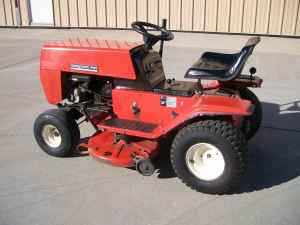
Well, the seedlings finally made it in and I planted them yesterday. The 25 mayhaws went together on a 10-12 foot spacing on a peninsula at the shallow northeast end of the pond. I put some near the waters edge and a couple are in the center of the peninsula. Boy, planting in the soft, sticky clay is a chore! The cypress went in on the opposite shore from the mayhaws. A large section there was flooded for a while and killed off some oaks. I was able to get these in between the drying out and reseeding of terestrial weeds. Hopefully I will not need to mow it to much before the little trees grow above the weeds. They are tough to see in a sea of green and I know a few will fall victim to the mower. I also hope the wildlife stays away from them. I am not to worried about deer, but the hogs are a nuisance. They may uproot them to eat the roots. I sure hope not. I also picked up a 1985 Montgomery Wards lawn tractor made by MTD on craigslist for $150, and it works! Well, except for the loose mower belt and the throttle lever I accidentally borke in half while putting it up for the day. Finally mowed a large portion of the areas that really needed it. The wife is happy now that she will be able to get around in her wheelchair. It seems to be a well built machine, and I am going to fix the small problems it has. It should also have enough power to pull a log arch to fetch logs to the mill.
Subscribe to:
Posts (Atom)