A used heavy duty tractor implement is a better buy, in my opinion, than some of the cheap looking new ones out in today's marketplace. The box blade you see to the right is a prime example. It is the proper width of 42" for my little tractor, uses captured pins for the 3 pt hitch instead of the common single sided ones, has a hinged tailboard with bolts to make it fixed, and weighs much more than the current crop of SCUT and CUT sized box blades. The only downside is the cutting edges are worn and have already been reversed. I am looking forward to a little seat time leveling out some of the forest road on our place and the funky off camber slippery slope next to the pond that keeps me out of the woods in the truck any time it is slightly damp in fear of sliding into the water. If we get a dry spell, I will be using it to cut a mud dam the beaver pushed up. My wife will also enjoy the smoother, level paths I can now make. I would also like to give the dealer a plug for going above and beyond. Zimmerer Kubota in Denton is where I found this little gem. They gave me the 3 pins to mount it, which were not shown in the internet listing. They also retapped the rear tailgate bolt holes and fitted new bolts with lock washers. I also had a chat with Len(sp?) Zimmerer about my tractor and the box blade since they opened when the B6100 was new and this box blade brand and style was the model they rented with it when interest rates were so high nobody could afford to buy. It is not every day you get a history lesson and a little implement refurbishing after you purchase something.
Showing posts with label pond. Show all posts
Showing posts with label pond. Show all posts
Thursday, March 3, 2011
Used tractor implements
A used heavy duty tractor implement is a better buy, in my opinion, than some of the cheap looking new ones out in today's marketplace. The box blade you see to the right is a prime example. It is the proper width of 42" for my little tractor, uses captured pins for the 3 pt hitch instead of the common single sided ones, has a hinged tailboard with bolts to make it fixed, and weighs much more than the current crop of SCUT and CUT sized box blades. The only downside is the cutting edges are worn and have already been reversed. I am looking forward to a little seat time leveling out some of the forest road on our place and the funky off camber slippery slope next to the pond that keeps me out of the woods in the truck any time it is slightly damp in fear of sliding into the water. If we get a dry spell, I will be using it to cut a mud dam the beaver pushed up. My wife will also enjoy the smoother, level paths I can now make. I would also like to give the dealer a plug for going above and beyond. Zimmerer Kubota in Denton is where I found this little gem. They gave me the 3 pins to mount it, which were not shown in the internet listing. They also retapped the rear tailgate bolt holes and fitted new bolts with lock washers. I also had a chat with Len(sp?) Zimmerer about my tractor and the box blade since they opened when the B6100 was new and this box blade brand and style was the model they rented with it when interest rates were so high nobody could afford to buy. It is not every day you get a history lesson and a little implement refurbishing after you purchase something.
Monday, February 21, 2011
Removing a beaver from a pond: Step 2
I made it out to the property yesterday to set up 2 Conibear 330's for the beaver. New sign was everywhere; so it is definitely still around. I had a lot of help from one of the moderators over at The Pondboss forum. I am not sure I would have safely figured out how to set them, or place them properly. He had a simple rope method to set the springs that left our digits out of the danger areas if it should trip. The traps were set in places where the beaver was entering and leaving the water with the trap's top just higher than the water level. We used sticks to block off any other routes to the spot making the beaver go through the trap. A little pile of mud was placed at the shoreline and a twig was some castor lure was stuck in its top. Now it is a waiting game until the beaver decides to use those two pathways or investigate the lure. I hope step 3 will be the removal of a beaver from a trap and not resetting traps to catch a wiley beaver or more beavers; so stay tuned.
Monday, February 7, 2011
Removing a beaver from a pond: Step 1
 A beaver can wreak havoc on a forest. Providing one with a nice pond for a home increases the chances it will settle in for the long term. Unless you like the looks of the picture at left, making it leave or removal are the only options. Previous visiting beavers left because of the fluctuating pond water level. Beavers do not like changing water levels. The current resident beaver has pushed a little mud around and, combined with a little silting in of the spillway channel, has managed to establish a stable water level on the pond for now. It has set up a nice lodge on our dirt pile at the western shore. We have been lucky that the beaver seem to prefer the green ash and willow growing along the pond shore and have only chewed a few larger green ash junk trees in the forested areas. I could try to induce it to move, but that would require quite a bit of dirt work redigging the spillway channel. Digging the channel does not create the fluctuating water level, droughty summers combined with it do. The only guaranteed way is removal. Many do not recommend shooting as they get real hard to catch or shoot with a missed shot. Trapping is the solution I am going with. A couple of conibear 330's and a castor oil bait are on their way. I have had lots of help from the folks over at http://www.pondboss.com/forums/ubbthreads.php . In fact, one of the members may be able to help me out on site in setting the traps. These are large traps taht are dificult to set and can really hurt you; so I would not recommend setting one without help and first hand knowledge. You may also want to check up on any local laws dealing with fur bearing animals and trapping. I hope to provide the follow up post on the removed nuisance beaver in a few weeks.
Monday, January 24, 2011
Clearing a piece of overgrown pond shore

I would have loved to have spent a day on the tractor, but the job at hand took priority. A skid steer with a mulching head would have been the perfect tool if I had the cash. Free manual labor had to do this time. The original pond must have been rectangular with a dam around all 4 sides. On the north side, it is mostly removed with a big peninsula on the west as pictured below and a smaller one on the east. The smaller one would make a nice secluded campsite. We need room for a tent pad, fire ring, and sitting area. It is relatively flat and overgrown with small trees and lots of thorny vines. You can see how dense it is on the edges of the photo. The brush saw would not stay running for long, but once I started taking the chainsaw to things I realized most was to large for my brush saw anyways. I had about 3 1/2 hours to do some clearing after a quick walk around the place to check everything. One more day should do it on the clearing and then I can take a sharp mattock to any offending stubs and mow the vines. We had a delimna deciding what to do with the brush: burn or chip. Burning is easy and can help clear those vines when done right on top of the clearing. Chipping gives us mulch we can use on paths and the tent camping site. Once all of the cutting is finished, we are going to rent a chipper and make mulch. We might as well make sure there is a full days chipping if we have to rent one for a day. I plan on cutting the larger trunks into firewood for use at home and here. I have a few other topics of interest that warrant a seperate post that I will post in the next few days. They will be about beaver that is still there and starting an orchard in some clear areas at the north end of the property.
Tuesday, December 21, 2010
The reason for the tractor

Here is part of my reasoning behind finally purchasing some form of tractor. The picture shows a peninsula that semi-seperates the main rectangular pond from the northern shallow pond. It is at a strange angle, overgrown, and generally unusable. I believe it is from excavating the pond and allowed the excavator to reach further portions of the pond during renovations in the past. it is shaped sort of like an inverted V with the north side steep and the south side sloping gently towards the water. I want to shape it with a flattened top, leaving the steep north side, and creating a possible building site or at least a packed gravel pad for my wife to enjoy the pond. A small cabin would have a great view from here of both parts of the pond. I cleared the brush over a year ago with a brush cutter, but the vines and a few trees are coming back from the roots. I am heading out to mow the year old shrubbery before they grow enough next year to require a rotary cutter. A middle buster/sub soiler combo at TSC will be picked up soon for busting up that grass and other gardening uses, maybe while I am out mowing. I will then go over it with a box blade and level it off. The next post should be of my mowing results and maybe a little logging/sawmill action if time allows.
Thursday, December 16, 2010
Tractor for work and pleasure

I bit the bullet and purchased a real, albeit small, Kubota B6100E tractor for the property. I had to find one small enough to keep in the backyard for security, and transport it back and forth. It came with a finish mower and a 25 gallon sprayer. The mower means I can actually get the front entry and pond mown and usable. The sprayer has a wand and two nozzles in the pointing down. I can treat the turf areas for weeds and spray the pond edge to kill the hook stealing vegetation. After a little work, we should be able to play a little easier next year. A box blade will need to be purchased for trail maintenance, and renting a few other implements when needed will make structures and access easier. I can't wait to start leveling out the lumpy area in front of the pond and maybe starting on a gravel road to get the truck further in. It slips on slick clay where I must turn and go uphill just feet from the pond edge and keeps the truck confined to the entryway. We don't need that kind of structure in there. I am going to make a hitch connector for the Logrite Junior arch to pull the larger logs. The Junior may be able to handle a 16'x16" log, but it ways a bit much to pull very far by hand. I plan on getting out there within a week and getting some mowing done to start with a fresh cut next year. A few of the plants growing are shrubby perennials and vines that need to be knocked down now before I must cut them and growing grass. It will also clear out the matted down dead grass. I only have 14hp to work with and no rotary cutter. A rotary cutter may be on my rental list once I know I can keep up with the current grassy areas. We also plan to use the tractor for some foodplots on ours and my fathers future property.
Thursday, December 9, 2010
Fall Woodlot Report Part 3: Evaluating the pond

Having the pond on the middle of a forested area has been an interesting learning experience. Trees bring all sorts of extra issues to a pond. They can die when flooded, they drop leaves that make muck in the pond bottom, they reseed all over the pond shore, and they are attractive to beavers. A beaver has set up a homestead on the pond. All that great timber to chew on and a nice convenient pond to live in has inticed one to stay. I had passers through before, but they left when they could not keep the pond level stable. It has been stable for over a year now and this beaver has not left, I think. It has built a den (see photo), tried to bulldoze mud into the overflow pipe, and who knows what other damage I am going to find. Luckily the den is not in the dam; so no tunnels have been found yet that might undeermine it. A conibear trap is in order I believe to get rid of the nuisance.
Trees can be a problem around a pond. I have a large dead area that floods to much and will need more flood tolerant trees like bald cypress and tupelos. These areas also make a nice wetland zone between the seasonal creek and the pond. Sediment is trapped in this area and extends the life of the pond. Leaves from the trees can build up in the pond as well creating a 'pond muck'. It is an anearobic sediment of rotting vegetable matter. I have researched aerators and microbes to act against it. The microbes are more in line with my budget and I may try some next year to get the eradication process started. The microbes you add are the same as the ones added to septic systems. They work anearobically to break down the plant matter. Aeration is quicker, more expensive, and needs elctricity usually. Finally, the trees around the pond make plenty of seeds to sprout around the pond. Usually trees on a dam are bad, but I have been told mine is fine by an expert dam consultant. My issue now is they block access and views. I hope to clear some out completely and clear brush/prune under others to make fishing and viewing spots. Willows and buttonbush are another concern of mine. They can take over the shoreline quickly. I will be using an appropriate herbicide on any I find. These grow very close and in the water; so a proper herbicide for around water is needed to prevent damage to the pond itself. My next post will be on the TSI work I am doing salvaging dead trees and cutting culls to make construction wood with the sawmill for projects on the property.
Friday, November 12, 2010
2 trips in 2 weeks, amazing!
I made it out 2 times in the past 2 weeks. Hope to make it out again next week to hunt and possibly do a little milling. It sure is looking good out there. Cut some wood for the mill, fireplace, and to deer hunt. I scoped out a concrete pad I am sizing up to build a pavilion on for picnics. The trees were cut for either posts or picnic table for the pavilion. A beaver has been out there but not sure if it is still around. A lot of dirt has been pushed up around the overflow pipe on the dam and I found the den. I checked on the trees I have planted. The bald cypress are doing well with some around 5 feet tall. The cottonwood has been hit by animals, and all that is left is little mud puddles in a neat line where they were planted. The mayhaws also look to have drowned in the high water. I will need to get a closer look with waders or rubber boots to tell them apart from the brushy plants. I will get another post up soon with pics and better details.
Friday, June 11, 2010
Finding replacement trees for newly flood prone areas

I have come to the realization that the pond on the property is going to flood quite a bit of the timber. I need to salvage what I can, but also find suitable replacements for the species that cannot stand wet feet for a prolonged period. A few more oaks died, luckily junky ones full of epicormic sprouts, and some eastern redcedar that will not rot before I can get to them. I will probably take the few remaining willow oaks that flood because it is only a matter of time before the flooding suffocates their roots. I already planted cypress last year before realizing just how deep and prolonged the high water gets. A few drowned, and quite a few could be seen this spring sprouting above the water or competing vegetation. The competing vegetation needs to be cut down around these carefully. I decided something else needed to be tried to the North of the pond, and was offered some free cottonwood cutting by a fellow from the Forestry Forum. The problem of figuring out which species to put in ended right there. Free trees is the best way to experiment. The area is along a relatively plant free water course exiting the pond along the north end of the dam. I planted them in a strip between the dam and water course where they should have enough moisture through the dry parts of the year. Planting was simple. I just made sure the buds faced up and stuck them in the ground with 2 nodes above the surface. The pic is from a week after planting and they were budding out nicely. a few did not sprout from the late time I planted these and a few were stepped on by animals knocking off the sprouts. If they work out well I plan to find a way to clear out the brush and grass on the other side of this seasonal waterway to make a proper seedling planting area and plant cottonwoods and bald cypress. Well, the time between new posts should be shorter now that I have a plan, simple projects, and some time to get them done.
Thursday, June 10, 2010
Suffering as a home body

I never realized how much I enjoyed the outdoors until circumstances forced me to stay at home. First, our beautiful little girl was born last August, and took up a lot of my time. My wife then developed some medical problems forcing me to stay around the house. Hopefully the end is in sight with a surgery and 6 weeks of recovery. I am amazed at the number of crazy ideas I have come up with during my time at home. Outbuildings, cabins, docks for the pond, all growing in size and complexity as time passed. Harvesting and management plans filled my mind with dreams of getting out to the property more often. Last week I settled down and determined what it would take to spend more time out there. Shelter of some sort would definitely help by letting me take the wife and kid with me, but the budget is tight. I took all those interesting ideas and drawings and filed them in a drawer. They were to large for the budget or to complex for the amount of time I have at the property. As I was strolling through the grocery store, a Mother Earth News DIY quarterly caught my eye. It contained an article called called "Build this Cozy Cabin" which can also be found on their website. Simple, inexpensive, and some of the larger timbers could be made on the sawmill out of post oak to save more money. The loft gives me a nice place for my daughter to sleep when she gets older and needs more space. It can also be found online here: http://www.motherearthnews.com/Do-It-Yourself/2006-06-01/Build-this-Cozy-Cabin.aspx . Now I have something to plan and budget for that will let us all enjoy the woods! I made time a few weeks back to plant some cottonwood cuttings that were given to me by a fellow ForestryForum.com member Brian Beauchamp, but that is post for another time, with pics!
Thursday, January 28, 2010
Wow, been a while!

It has been quite a while since I updated this series or been out to the woods. A new addition to the family in the form of a little girl will do that to a person. I had to make time to get out and check on the pond and property. A few items on the to do list had to be taken care of also. The pond was very high when I first pulled in the gate; so a walk around was the first order of business. I shortly found out it was to be a slosh around. Water was pouring into the pond with only 1/2" of rain for the month. The ground was visibly saturated with lots of ponding everywhere a low spot occured. In the back of the property, the culvert leading into the pond had water flowing over it. The culvert for the pond dam end letting the spillway lead into the creek was practically washed out. A large pond has formed where the overflow pipe emptied behind the dam. Drainage needs to be deepened for it as the picture shows.l The standing water there explained the stressed trees in that area. Lots of dirt work is going to be needed in the future, probably to tear out the culverts and add small bridges instead.
I was able to work on realeasing a small area of saplings near the sawmill area. There was a funky post oak and some gnarly, bent cedar elms over topping them. I was able to take down most of them, but time constraints meant I had to leave 2-3 for the next time. I also cut some problem trees that were to close to more desireable trees on the way back. The wet ground prevented me from picking up any of the wood; so I stacked it neatly on the side of the path. I hope to accomplish more the next time I am, barring anymore water damage. I need to finish releasing rhw incomplete area and cutting that wood into firewood. I then need to mark and cut any other bad form trees leading up to that area. I have the property blocked out into 5 areas, and I never really worked on area 1 last year. Twice the work, but twice the fun!
Thursday, July 9, 2009
BMP's and a trail through the woods
BMP's, or best management practices, are a landowner's friend. They keep a property looking good, prevent future damage, and help keep the neighbors happy. Texas does not require following their BMP guidlines. It is voluntary, and you must make sure they are followed on your property when you have it logged. Here is a link to the Texs BMP's: http://txforestservice.tamu.edu/uploadedfiles/sustainable/bmp/bmpbookindd.pdf .
A trail through the woods is always important if you plan on enjoying them close up. The BMP guidelines can be helpful in planning the trail route and it's construction. If you plan it right, you can even convert logging roads into trails for future use. I have an old logging road running around our property in the shape of a C connecting the two ends of the dam. BMP's were not followed when making this road. A few places need runoff control. The stream crossings are also not in very good shape, but are only an aesthetic and vehicle access issue. I am going to start with the runoff problem since it is the cheapest problem. Wheelchair access for my wife creates an extra dimension to the trail issue. We will be making the trail as smooth as possible with water bars created with trash trees to direct runoff to prevent erosion of the smooth path. Erosion control is also important when you consider all of our runoff goes into the pond. Runoff affects water clarity, condition, and content. It is much easier to control runoff on your property athn to treat a pond for turbidity and other water problems. A properly designed trail should be able to accomodate us and occassional vehicle traffic while limiting harmful impact to the woodlot and wildlife.
A trail through the woods is always important if you plan on enjoying them close up. The BMP guidelines can be helpful in planning the trail route and it's construction. If you plan it right, you can even convert logging roads into trails for future use. I have an old logging road running around our property in the shape of a C connecting the two ends of the dam. BMP's were not followed when making this road. A few places need runoff control. The stream crossings are also not in very good shape, but are only an aesthetic and vehicle access issue. I am going to start with the runoff problem since it is the cheapest problem. Wheelchair access for my wife creates an extra dimension to the trail issue. We will be making the trail as smooth as possible with water bars created with trash trees to direct runoff to prevent erosion of the smooth path. Erosion control is also important when you consider all of our runoff goes into the pond. Runoff affects water clarity, condition, and content. It is much easier to control runoff on your property athn to treat a pond for turbidity and other water problems. A properly designed trail should be able to accomodate us and occassional vehicle traffic while limiting harmful impact to the woodlot and wildlife.
Tuesday, July 7, 2009
Taking a forest walk
We went on vacation in Arkansas and went on some nice drives along the Buffalo National River. One spot that was accessible for my wife to get out was near the Henry R. Koen Experimental Forest. We had a picnic and enjoyed the view of the river and forest. Access to the Koen Interpretive Trail in the experimental forest can be found along the Erbie Loop drive on the following website: http://www.nps.gov/archive/buff/autotour.htm . It is a short and easy trail with a lot of labeled trees. If you ever wondered how they experiment on a forest, here is your chance. It is also worth a drive for the views and the old farmsteads along the way. A beautiful area with some great views of rugged hills covered with forest and, of course, the Buffalo river.
Petit Jean State Park has another wheelchair accessible trail that gave me great ideas for our property. It is a boardwalk to an overlook of Cedar Falls. It was easy to walk on and for her to roll on. I believe it would be a great way to make some of the seasonally flooded areas accessible to everyone. A short raised boardwalk over the water and around some of the pond would be great for seeing some of the wildlife. A boardwalk is a lot of work and needs a large amount of wood, but it may be the best option for the property for making it accessible.
Petit Jean State Park has another wheelchair accessible trail that gave me great ideas for our property. It is a boardwalk to an overlook of Cedar Falls. It was easy to walk on and for her to roll on. I believe it would be a great way to make some of the seasonally flooded areas accessible to everyone. A short raised boardwalk over the water and around some of the pond would be great for seeing some of the wildlife. A boardwalk is a lot of work and needs a large amount of wood, but it may be the best option for the property for making it accessible.
Saturday, May 16, 2009
Rain, rain, go away ...
Rain is the bane of my attempts to work on the woodlot right now with 13.2" so far this month and we were double the average last month. May is usually the last chance to work outside before it gets hot in Texas. I managed to go out and check on conditions. The pond is way up and flooding where the dead oaks are located. We finally have definitive proof of why that is happening. Full pool only occurs in the spring and saturates the soil enough to kill the post and willow oaks. I will need to plan for planting more cypress or another water loving tree there next year as these trees desintegrate and rot. A high water level is killing my newly planted cypress and mayhaw seedlings. They can stand flooding as long as their tops are above the surface. Mortality will be higher, but I expected some. They don't last long when they are a foot under the surface. A lone, sick hickory was the only casualty from the severe thunderstorms. Hopefully, the place will dry out some soon so that I can saw up the rest of the dead eastern red cedar and start on my forestry projects of releasing some sapling areas and culling some damaged trees for firewood and saw up some wood for a dock.
Wednesday, April 29, 2009
Cypress - an alternative crop tree
Cypress brings images of swamps and huge, moss draped trees. A lot of people do not know that it is a fast growing conifer that works well when planted for a future crop tree. The popular image of the swamp full of bald cypress is because of the tree's traits. It can withstand standing water for long periods of time and resists windthrow, important in soft ground. Cypress is often outcompeted on good sites by hardwoods. It is a component of oak-gum-cypress forests, and is usually only a pure stand where conditions prevent competition from other trees. A cypress planted in good soil will grow quickly, have good form, and self prunes well with proper spacing. The ability for it to grow in poor, water logged soils adds to its crop tree potential. I planted an area the pond floods seasonally with cypress earlier this year. We could not get any information from the local forester in time, so we went ahead and planted 200 with 8'x8' spacing. The idea was to replace some dead oaks with a water tolerant species while adding diversity and a tree useful for timber. The nice look of cypress on a pond helped too. Seedling mortality may jump since the pond has flooded most of them, and we may still have a nutria that likes to eat them. Anybody looking for decent timber production in a flood prone area should consider planting cypress. Here are some sites where I researched my decision:
http://www.sref.info/publications/online_pubs/cypress.pdf
http://www.srs.fs.usda.gov/pubs/ja/ja_parresol014.pdf
http://www.fpl.fs.fed.us/documnts/usda/amwood/218baldc.pdf
http://www.sref.info/publications/online_pubs/cypress.pdf
http://www.srs.fs.usda.gov/pubs/ja/ja_parresol014.pdf
http://www.fpl.fs.fed.us/documnts/usda/amwood/218baldc.pdf
Monday, April 27, 2009
Mayhaws for problem areas and tasty jelly
The mayhaw is a little known rural South secret. Jelly made from the fruit of this small tree is considered by many to be the best they have ever tasted. Three different species cover a range from east Texas across the gulf and up into the Carolinas and southern Arkansas. An excellent property of this little tree is a tolerance to flooding. How many crops, orchards, or timber producing trees can be grown on flood prone land? The choices are slim, especially if you want trees. I chose to try out 25 saplings near my pond where we did not want to plant cypress. Spring rains flood this area for 6 months out of the year. We chose native mayhaws because we are at the northern range for mayhaws. Hybrid cultivars with larger fruit and harvests are available, but may only be suitable for the deep South in zone 9. I say 'may' because the fruit is such a new commercial crop that long term tests are not complete and new varieties are coming out. Another nice aspect of this tree is that it is adaptable to many environments. It makes the best crop when planted in an orchard on well drained, fertile soil but can also grow in the understory of bottomland forest where it is found in the wild. Ours will be open grown, but with a flood prone, clay soil. I expect larger harvests than in the wild, but similar growth because of the soils. Mayhaws could be a great choice for southern woodlots by providing an edible yearly crop from areas with low site indexes because of flooding and heavy soils. A great source for more information is the Louisiana Mayhaw Association: http://www.mayhaw.org/ .
Saturday, February 7, 2009
The trees are in
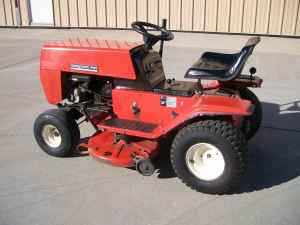
Well, the seedlings finally made it in and I planted them yesterday. The 25 mayhaws went together on a 10-12 foot spacing on a peninsula at the shallow northeast end of the pond. I put some near the waters edge and a couple are in the center of the peninsula. Boy, planting in the soft, sticky clay is a chore! The cypress went in on the opposite shore from the mayhaws. A large section there was flooded for a while and killed off some oaks. I was able to get these in between the drying out and reseeding of terestrial weeds. Hopefully I will not need to mow it to much before the little trees grow above the weeds. They are tough to see in a sea of green and I know a few will fall victim to the mower. I also hope the wildlife stays away from them. I am not to worried about deer, but the hogs are a nuisance. They may uproot them to eat the roots. I sure hope not. I also picked up a 1985 Montgomery Wards lawn tractor made by MTD on craigslist for $150, and it works! Well, except for the loose mower belt and the throttle lever I accidentally borke in half while putting it up for the day. Finally mowed a large portion of the areas that really needed it. The wife is happy now that she will be able to get around in her wheelchair. It seems to be a well built machine, and I am going to fix the small problems it has. It should also have enough power to pull a log arch to fetch logs to the mill.
Sunday, January 18, 2009
Planting trees
I have been reviewing every book I can to find the types of trees to plant in some thinly stocked and open areas near the pond. It floods periodically and some of the areas have dead oak trees where high water suffocated them. I believe I am going to plant some cypress in the open areas. They should look nice from a pond standpoint. I am going to plant them as a crop tree with the thinnings going into my portablse sawmill as small boards for around the place. I may plant some tupelo to mix it up a little with the cypress. The thin areas have a few good trees I would like to leave. A tolerant or intermediate species is a must in this area so the options are a little limited. I came across a book that discussess sycamore as a crop tree. I believe I will try this in a test and see how they do. Sycamore does not naturally occur in groves and is usually in a mixed forest. It grows to 65' in 20 years on good sites, which I have. It is intermediate, so it should work well in the openings created when I cut out the malformed stems this year. I am going to research it some more since the trees will not be planted until next year. I may get a few cypress in this year since no clearing will be needed.
Saturday, January 17, 2009
Pond Boss regional meeting
Wow, what a group of people with ponds. I attended the regional meeting today hoping to learn a little about fish. I came away with some new friends and quite a bit of knowledge. We went to see two ponds that have not filled. I wish there was a way to redevelop the structure of a pond without removing the water. I discussed the ability to fluctuate the water levels with Bob Lusk. He told me the spawning habits of fish in these situations. The fish want to fill up the newly enlarged pond with a larger spawn. Lowering the pond then shrinks the size and concentrates the forage fish. This leads to larger predators due to increased food. In short, the largemouth bass get bigger faster and could get bigger overall. I believe a project may be in the works this summer so that I can try the principle. The flood would occur just before spawn to open up new spawning areas and flood terrestrial plants for cover. The water would be allowed to drop to the original pond level after the spawn to concentrate all of the new forage. A few bags of concrete, some 2x4's, and a pile of compacted clay in the back should be enough to dam the water in the spillway creek. If it works, then a stronger concrete structure with a penstock may take its place. A big thank you to Chris Steelman and Frank Peeples for having us at their places
Thursday, January 8, 2009
Mike Otto comes for a visit
Mike Otto, pond builder extraordinaire, came out to look over the pond dam to make sure everything was in order. I sure did not want to build anything that was going to be in the way of any repair work. I had tried to describe the pond over the phone, but he had to come in person. It is one of those "you need to see it to believe it" sort of situations. We walked around the entire pond. He figured out that the drain pipe is only for extreme emergencies and is fine. The main means of removing water is a carefully engineered rerouting of a seasonal creek. It drains directly into the pond until full. The water then becomes high enough to travel north into the creek bed, around the end of the dam, and south again in the original creek bed. No spillway needed and the chances of dam problems from it is virtually nonexistent. He also discussed putting in a gate instead of the culvert at the end of the dam for a foot more water in the pond. It could work to seasonally flood the shallow end for duck habitat. One other important detail he informed me about was trees on the dam. He said they are no problem on my dam. We found 3 very large stumps, and they are not producing leaks. If you need a pond dug in north Texas or have a question about one, then Mike Otto is the man to see: http://ottosdirtservice.com/default.aspx Overall, it was a productive day learning what I should and should not do, and even got a little work done trimming trees around the pond.
Subscribe to:
Posts (Atom)