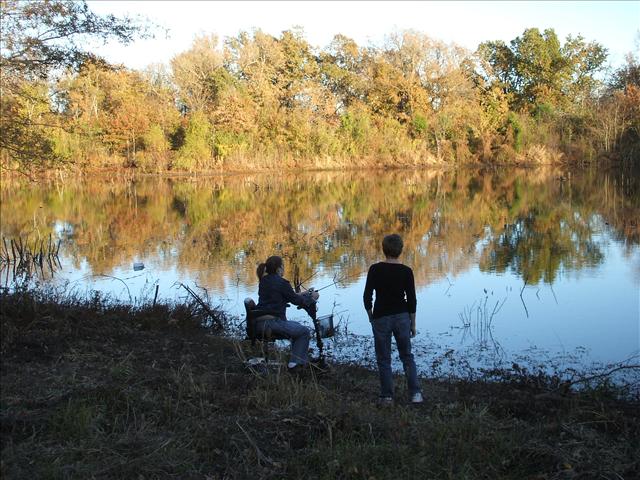
I have decided an orchard is the best option for an area north of the pond that has a few trees, lots of grass, and almost no regeneration. Best managment practices say you should not cut trees near streams and other bodies of water. I would not want to plant a tree that I knew would be cut down in the future. Especially since the recommended BMP buffer zone is only going to expand in the future as more people veiw the land as something to protect and not another harvest. The orchard site is in a V between the inlet stream and the outlet stream for the pond. In the photo, you can see the site and the scattered trees that must come out. A bit of land may be useable on the eastern side of the outlet stream as well. A delimna has risen over what to plant. These are not just a yearly crop so you don't want to get it wrong. Mayhaws were my first thought, but the problem is marketing the berries. Jelly and other retail products would be easier, but take a $10k certified kitchen to produce legally. I have begun studying other fruits to grow organically, but run into time, quality, and sitability issues. Pecans are starting to be the front runners now. They have the most proven organic research. A lot of support is available in Texas, including marketing. It is also wide spread and accumulators are present in many locations that buy from small producers. The trick now is figuring out if a small scale operation can make enough money to justify the required equipment. Oh well, more reading to do while I prepare the site by cutting a few trees and starting mowing it down real low in preparation for planting next winter.
Showing posts with label plan. Show all posts
Showing posts with label plan. Show all posts
Tuesday, January 25, 2011
The orchard site
I have decided an orchard is the best option for an area north of the pond that has a few trees, lots of grass, and almost no regeneration. Best managment practices say you should not cut trees near streams and other bodies of water. I would not want to plant a tree that I knew would be cut down in the future. Especially since the recommended BMP buffer zone is only going to expand in the future as more people veiw the land as something to protect and not another harvest. The orchard site is in a V between the inlet stream and the outlet stream for the pond. In the photo, you can see the site and the scattered trees that must come out. A bit of land may be useable on the eastern side of the outlet stream as well. A delimna has risen over what to plant. These are not just a yearly crop so you don't want to get it wrong. Mayhaws were my first thought, but the problem is marketing the berries. Jelly and other retail products would be easier, but take a $10k certified kitchen to produce legally. I have begun studying other fruits to grow organically, but run into time, quality, and sitability issues. Pecans are starting to be the front runners now. They have the most proven organic research. A lot of support is available in Texas, including marketing. It is also wide spread and accumulators are present in many locations that buy from small producers. The trick now is figuring out if a small scale operation can make enough money to justify the required equipment. Oh well, more reading to do while I prepare the site by cutting a few trees and starting mowing it down real low in preparation for planting next winter.

Friday, June 11, 2010
Finding replacement trees for newly flood prone areas

I have come to the realization that the pond on the property is going to flood quite a bit of the timber. I need to salvage what I can, but also find suitable replacements for the species that cannot stand wet feet for a prolonged period. A few more oaks died, luckily junky ones full of epicormic sprouts, and some eastern redcedar that will not rot before I can get to them. I will probably take the few remaining willow oaks that flood because it is only a matter of time before the flooding suffocates their roots. I already planted cypress last year before realizing just how deep and prolonged the high water gets. A few drowned, and quite a few could be seen this spring sprouting above the water or competing vegetation. The competing vegetation needs to be cut down around these carefully. I decided something else needed to be tried to the North of the pond, and was offered some free cottonwood cutting by a fellow from the Forestry Forum. The problem of figuring out which species to put in ended right there. Free trees is the best way to experiment. The area is along a relatively plant free water course exiting the pond along the north end of the dam. I planted them in a strip between the dam and water course where they should have enough moisture through the dry parts of the year. Planting was simple. I just made sure the buds faced up and stuck them in the ground with 2 nodes above the surface. The pic is from a week after planting and they were budding out nicely. a few did not sprout from the late time I planted these and a few were stepped on by animals knocking off the sprouts. If they work out well I plan to find a way to clear out the brush and grass on the other side of this seasonal waterway to make a proper seedling planting area and plant cottonwoods and bald cypress. Well, the time between new posts should be shorter now that I have a plan, simple projects, and some time to get them done.
Wednesday, April 29, 2009
Cypress - an alternative crop tree
Cypress brings images of swamps and huge, moss draped trees. A lot of people do not know that it is a fast growing conifer that works well when planted for a future crop tree. The popular image of the swamp full of bald cypress is because of the tree's traits. It can withstand standing water for long periods of time and resists windthrow, important in soft ground. Cypress is often outcompeted on good sites by hardwoods. It is a component of oak-gum-cypress forests, and is usually only a pure stand where conditions prevent competition from other trees. A cypress planted in good soil will grow quickly, have good form, and self prunes well with proper spacing. The ability for it to grow in poor, water logged soils adds to its crop tree potential. I planted an area the pond floods seasonally with cypress earlier this year. We could not get any information from the local forester in time, so we went ahead and planted 200 with 8'x8' spacing. The idea was to replace some dead oaks with a water tolerant species while adding diversity and a tree useful for timber. The nice look of cypress on a pond helped too. Seedling mortality may jump since the pond has flooded most of them, and we may still have a nutria that likes to eat them. Anybody looking for decent timber production in a flood prone area should consider planting cypress. Here are some sites where I researched my decision:
http://www.sref.info/publications/online_pubs/cypress.pdf
http://www.srs.fs.usda.gov/pubs/ja/ja_parresol014.pdf
http://www.fpl.fs.fed.us/documnts/usda/amwood/218baldc.pdf
http://www.sref.info/publications/online_pubs/cypress.pdf
http://www.srs.fs.usda.gov/pubs/ja/ja_parresol014.pdf
http://www.fpl.fs.fed.us/documnts/usda/amwood/218baldc.pdf
Wednesday, March 18, 2009
Milling and finally getting the forester out
First of all, I finally scheduled a date with the state forester. It kind of fell between the tracks between me being patient and them forgetting all about it. April 1st is the day I will finally get some professional help. In the mean time, I have been moving ahead with my plans. I need to get back out there and mill enough bois d'arc for someone. I also have quite a few dead cedar to get milled. I am going to start cutting culls once i have milled these other items. The forest is divided into 5 segments along natural changes or geographic features. I tried to size each to make work easier to plan. Each area has a similar tree density, species types, and problems within it. Each covers an area I should be able to work each year. I will basically have a rotating 5 year work schedule. The first step I am taking is cutting the junk out. The forester will tell me if this is right or wrong, hopefully. I am sure he is going to suggest a clearcut and replant it with pine, but I am not sure I want that. Maybe a small area where the soil is best for pine. I can't wait to see what he can tell me!
Sunday, January 18, 2009
Planting trees
I have been reviewing every book I can to find the types of trees to plant in some thinly stocked and open areas near the pond. It floods periodically and some of the areas have dead oak trees where high water suffocated them. I believe I am going to plant some cypress in the open areas. They should look nice from a pond standpoint. I am going to plant them as a crop tree with the thinnings going into my portablse sawmill as small boards for around the place. I may plant some tupelo to mix it up a little with the cypress. The thin areas have a few good trees I would like to leave. A tolerant or intermediate species is a must in this area so the options are a little limited. I came across a book that discussess sycamore as a crop tree. I believe I will try this in a test and see how they do. Sycamore does not naturally occur in groves and is usually in a mixed forest. It grows to 65' in 20 years on good sites, which I have. It is intermediate, so it should work well in the openings created when I cut out the malformed stems this year. I am going to research it some more since the trees will not be planted until next year. I may get a few cypress in this year since no clearing will be needed.
Tuesday, December 23, 2008
Why should I have a Forest Stewardship Plan?
While I could go into it myself, the Forest Landowners Association http://www.forestlandowners.com does a better job in their article here: https://www.forestlandowners.com/files/9%20Reasons%20for%20a%20Forest%20Stewardship%20Plan.pdf . One of the keys to a good plan is a good timber inventory which they also outline here: https://www.forestlandowners.com/files/archives/timber-inventory-managing-timberlands-in-the-southern-u-s.pdf . Look for other interesting articles in their archive section, you cannot get full access to all articles unless you are a member. I am pondering joining this organization, they have some excellent material for the woodlot owner. I am also considering joining the Texas Forestry Association http://www.texasforestry.org/ so that I can get information specific to my state. Check your state, you may have resources in the form of a forestry association also.
Friday, December 19, 2008
Texas Forest Service forester contacted me
Oh boy, the new management plan program is not slow! I faxed in the form late last week and they gave me a call today. I guess I was one of the first, because they had some problems with the form and fixed them when I pointed them out. The forester said they would do a walk through after the holidays and give me suggestions on what to do next.
Friday, December 12, 2008
Forester guidance form
Sent in my form today to the Forest Service, hopefully it does not take to long. I will send in my form to TPWD for technical quidance on the wildlife side of things including the pond and open areas. The guidance will be in preperation for applying to the Landowner Incentive Program(LIP): http://www.tpwd.state.tx.us/landwater/land/private/lip/ . Hopefully I will qualify for some state assistance since I have prime habitat for some threatened freshwater mussels, a woodland plant called Arkansas Meadow-rue, and maybe some others. The mussels already live in the pond. I hope to be able to replant the pond perimeter with native plants and get some assistance with some timber stand improvement where the meadow-rue could be planted or may already be. The next chance I have to get out there to work is the day after Christmas. I need to clean up the brush I already cut around the pond into firewood and brush piles built for animal habitat. Many of my books describe there construction, but the Maryland DNR has the best web description: http://www.dnr.state.md.us/wildlife/wabrush.asp .
Thursday, December 11, 2008
Texas Forest Service website update
The website has always had a lot of good info, but they have finally updated with instructions for getting your local state forester out to your property! http://texasforestservice.tamu.edu/main/article.aspx?id=2012 This is the link ot the landowner section that will get me started on a professional forestry plan. Maybe I will be able to get some professional help after all. Many other states have a forest service or dnr that can provide a lot of information to the property owner. States that have traditionally had smaller property owners seem to support them better than Texas does.
Subscribe to:
Posts (Atom)